
License plate recognition
A camera that reads the plate, and a gate that opens for the ones you know.
REVIEWED 2026-09-02 · BY JONATHAN ASHKELON, CO-OWNER AND FIELD LEAD · CSLB #1042768
LPR — license plate recognition, also called ANPR — is a camera and software pairing that reads a vehicle’s plate, converts it to text, and checks it against a list. At an entrance, a match on the allow-list tells the gate operator to open; everything else is logged and ignored. The value is not surveillance, it is friction removed: residents, staff and known vehicles drive in without a fob, a code, or a stop, while the gate stays shut to everyone else.
01 — How the read actually happens
Four things happen in the second a car approaches:
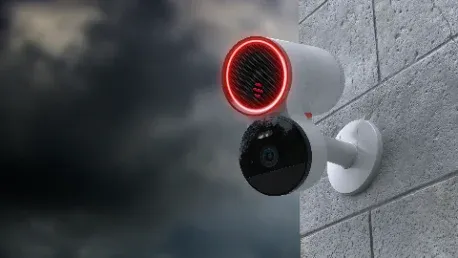
- Capture. A dedicated LPR camera fires its own infrared illuminator and uses a fast shutter tuned to the retroreflective plate coating. That is what freezes the plate cleanly while the rest of the frame goes dark — and why a normal security camera cannot do this job.
- Locate. Software finds the rectangle of the plate within the image, corrects for angle, and isolates the characters.
- Read. Optical character recognition converts the characters to text — "7ABC123" — with a confidence score.
- Decide. The text is matched against the allow-list. A hit pulses the operator’s open relay. A miss is written to the log, and can trigger the intercom so someone inside can look and buzz the vehicle in.
02 — Why LPR fails, and how a good install prevents it
| FAILURE | WHAT PREVENTS IT |
|---|---|
| Steep angle | Camera mounted low and close to the drive lane, no more than ~30° off the plate. This is a mounting decision, made on the site walk. |
| Speed blur | A capture zone placed where cars are already slowing for the gate, plus a shutter fast enough for that speed. |
| Headlight washout / darkness | A purpose-built LPR camera with its own IR, not a general-purpose camera repurposed for the task. |
| Dirty, framed or tilted plates | A confidence threshold and an intercom fallback, so a marginal read routes to a human instead of leaving a resident stranded. |
03 — Where it earns its place
- Gated communities and HOAs — residents enter hands-free; the guest lane still uses a call box. Fewer clickers to lose and reissue.
- Fleet yards and industrial sites — company vehicles clear the gate without a driver reaching out a window, and every entry and exit is time-stamped by plate.
- Estates with staff and service traffic — the housekeeper’s and landscaper’s vehicles are on the list on their days; a plate that shows up at 2am is flagged.
04 — How it ties into the rest of the system
LPR is one credential among several. It sits on the same gate operator as your keypad, intercom and card readers, and its read log lives on the same private server as your cameras — no separate cloud account, no monthly per-plate fee. If you already have an automated gate, adding LPR is a camera, a mount, a wire run and a relay, not a new system.
The install itself is our License-Plate Recognition service. Every property is different, so it starts with a site walk to settle the camera position before any hardware is ordered.
What is the difference between LPR and ANPR?
None. LPR (license plate recognition) is the common term in the US; ANPR (automatic number-plate recognition) is the same technology, mostly used in the UK and Europe. Both mean a camera and software that read a vehicle’s plate and turn it into text.
Can LPR open my gate automatically?
Yes. The reader is wired to the gate operator the same way a keypad or card reader is. A plate on the allow-list triggers the open relay; anything else is ignored, or routed to an intercom for a manual decision.
Does it work at night?
A purpose-built LPR camera does, because it carries its own infrared illuminator and a fast shutter tuned for the retroreflective coating on a plate. A general-purpose security camera pointed at the driveway usually does not — it gives you a bright blur of headlights.
How fast can a car be moving?
Residential entrance readers are typically good to 20–30 mph. Dedicated highway-grade units read plates well past 100 mph, but that hardware is overkill for a driveway or a yard gate.
What about privacy and the plate data?
That is a real question and worth settling before install. On a private-server system the read log lives on your NVR, under your retention policy, not in a vendor cloud. We set retention deliberately and can scope who has access.
We’ll walk the entrance, check the sightline and speed, and tell you honestly whether LPR is the right credential for your gate.