
Anti-climb fencing: what it costs per foot, and when it beats a block wall
A fence that a teenager can climb in four seconds isn't security. It's decoration. The difference between a fence that stops people and one that just slows them down has very little to do with height. It comes down to whether there's anything to grab, stand on or cut through. Here's what anti-climb fencing costs, how it compares to a block wall, and how to choose.
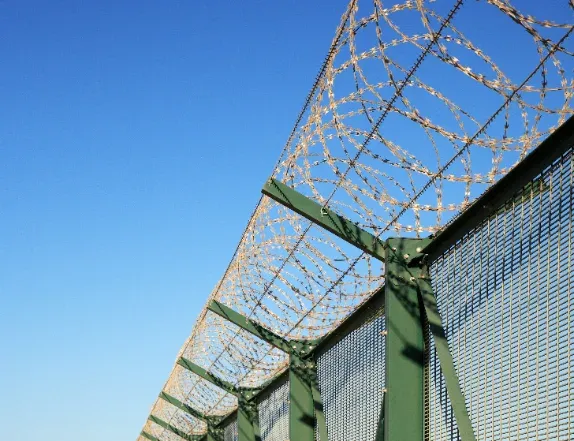
01The short answer
- Anti-climb mesh starts at $85 per square foot installed in Southern California, depending on height and mesh. Estate-grade ornamental steel built to anti-climb rules starts at $220 per square foot.
- A 6-foot reinforced block wall with footing and cap starts at $350 per linear foot.
- Block walls win on privacy and noise. Anti-climb fencing wins on cost, speed and security, because there's nothing to grip and your cameras can see through it.
- What makes a fence anti-climb is no handholds, no footholds and no horizontal rails on the outside, not just height.
- Check your city's height limits and rules on spikes and razor wire before you buy.
02Starting prices for each option
Starting prices in Southern California, November 2026. Not a quote. Your price comes after a site visit, in writing, before any work starts.
What actually stops a climber
Height alone stops almost nobody. A six-foot fence with a horizontal rail at the bottom and another at the top is a ladder: one foot on the bottom rail, a hand on the top, and over. The fences that work deny the three things a climber needs.
- Nothing to grip. Vertical infill or mesh with openings too small for fingers.
- Nothing to stand on. No horizontal rails on the outside face, and no gaps wide enough for a toe.
- Nothing to cut quietly. Heavy-gauge steel or tight mesh that bolt cutters struggle with.
Add a crown that denies a grip at the top, posts set deep enough that the fence can’t be pushed over or lifted, and a bottom edge close enough to the ground that nobody slides underneath. That’s an anti-climb fence.
The three anti-climb options
Welded-mesh anti-climb fencing
Tight vertical wire mesh panels on steel posts. It’s the workhorse of commercial yards, utility sites and storage facilities, because it’s strong, see-through and fast to install. It looks industrial, which is the point at a truck yard and less ideal at a front gate.
358 high-security mesh
A specific, very tight mesh, with openings about 3 inches by half an inch. That’s too small for fingers and toes, and the dense wire is slow to cut. It’s the step up when a site needs real resistance, not just deterrence: equipment yards, data and utility sites, and high-value properties with exposed rear lines.
Ornamental steel built to anti-climb rules
The estate option. Steel pickets designed to look like a fine iron fence, but built without the outside rails and handholds that make most ornamental fencing easy to climb. It costs the most of the three and looks the best, which is why it’s the usual choice along a street face where the HOA and the neighbors are watching.
Block wall or anti-climb fence?
Block walls are popular in Southern California for good reasons: privacy, noise reduction and a solid, permanent look. Security is where they’re weaker than people think.
- They’re climbable. A block wall’s face and cap give a climber something to step on and grab, and a boost from a friend does the rest.
- They hide intruders. Once someone is over a solid wall, nobody on the street sees them, and neither do cameras facing out.
- They cost more and take longer. Footings, rebar and grout are standard here, so a block wall costs more than mesh and takes far longer to build.
The answer is often both: a block wall where privacy matters, like the back of the house, and anti-climb fencing along open lines, side yards and areas you want cameras to cover. On a slope, or where the soil is poor, the footing for a block wall can get expensive fast, and a fence wins on cost by a wide margin.
Toppers: rollers, spikes and what’s allowed
A topper makes the last foot of a fence the hardest part to get past. Rotating rollers spin under a climber’s hands. Spiked crowns and rotating spike bars deny a grip.
Barbed and razor wire are a different story. Many Southern California cities restrict them on residential property, and HOAs almost always do. On a commercial site they may be fine. Check before you buy, because a topper you have to take down is money thrown away.
Height limits, permits and HOAs
Every city sets its own rules, and they change with where the fence sits on your lot. A common pattern is about 42 inches in the front-yard setback and 6 to 8 feet along the sides and rear. Walls and fences over a certain height, or built on a slope, often need a permit and engineered plans. HOAs add design review on top.
We check the rules for your address before we design, so the fence you approve is a fence you can legally build.
Don’t forget the gates
A great fence with a weak gate is a weak fence. Every pedestrian gate in an anti-climb line should be built to the same standard, self-closing and self-latching, and credentialed the same way as your vehicle gate if you have access control. Vehicle gates belong in the plan too. If you’re automating one, see what it costs to automate an existing gate. Where vehicles are the threat rather than climbers, fencing isn’t the answer at all. That’s a job for security bollards.
09What drives the price up or down
- HeightTaller panels, deeper footings and more steel. An 8-foot fence costs noticeably more per foot than a 6-foot one.
- Ground and accessSlopes, rock, tree roots and tight side yards slow installation and can require stepped or racked panels.
- FinishGalvanized, powder-coated or both. Coastal properties need heavier corrosion protection.
- Length of the runLong, straight runs cost less per foot than short runs with lots of corners, posts and gates.
- HOA and city rulesDesign review, height limits and engineering requirements can change the materials and the timeline.
10Questions people ask
How much does anti-climb fencing cost per foot?
In Southern California, welded-mesh anti-climb fencing starts at $95 per linear foot, 358 high-security mesh at $95 per square foot, and ornamental steel built to anti-climb rules at $220 per square foot, installed. Height, terrain, finish and gates move the number.
Is a block wall more secure than a fence?
Not necessarily. A block wall is solid and private, but its face and cap give a climber something to stand on and grip, and once someone is over it, your cameras can't see them. An anti-climb fence gives a climber nothing to hold and keeps the whole line visible.
What makes a fence anti-climb?
No handholds, no footholds and nothing to cut through quietly. That means tight vertical infill or mesh with openings too small for fingers and toes, no horizontal rails on the outside face, a crown that denies a grip, and posts set deep enough that the fence can't be pushed or lifted.
How tall can my fence be?
It depends on your city and where the fence sits. Front-yard fences are often limited to about 42 inches, and side and rear fences to 6 to 8 feet. HOAs may be stricter. We check the rules for your address before we design anything.
Can I put razor wire or spikes on my fence?
Many Southern California cities restrict barbed and razor wire on residential property, and some limit spikes too. Rotating rollers and spiked crowns are often allowed where wire isn't. Check with your city first, and ask us what's permitted at your address.
Is ornamental iron actually secure, or just decorative?
Built correctly, with no outside rail, tight picket spacing and no handhold at the top, ornamental steel is a genuine anti-climb fence. Built the usual way, with rails on the outside, it's a ladder with nice paint.
11Where we can help
12Keep reading
- Security bollard costs: what drives the price of fixed, removable and crash-rated bollards
- What does a parking barrier arm cost to repair, replace or install?
- Barrier arm stuck up, stuck down or hit by a car? Causes and what each costs to fix
- Automatic gate won't close? The 7 usual causes and what each costs to fix